Guernsey Employment Trust

Island
Employment, literacy, financial literacy and debt problems
Issue
£30,000

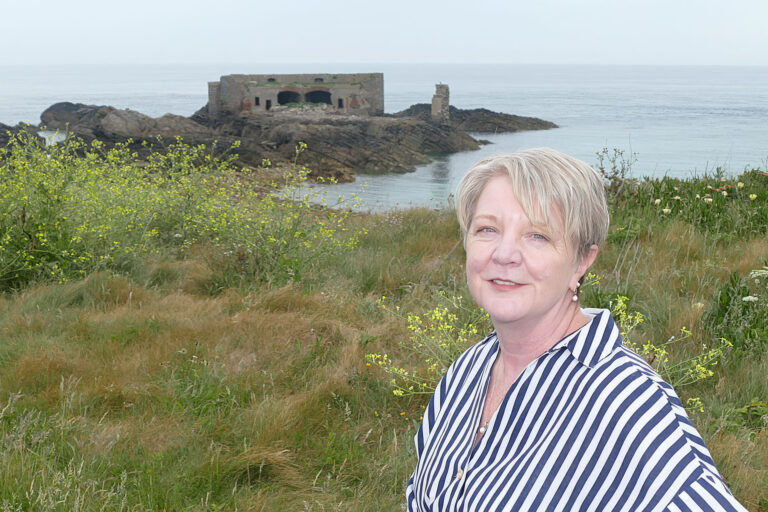
Ask Nikki Ioannou-Droushiotis, Chief Executive of Guernsey Employment Trust (GET), what the charity does, and she will tell you about job matching, workplace support, and employer engagement. Ask her why it matters and the answer blossoms. “Getting into work is far more than just getting a job,” she says. “It’s about being included. Having a routine. Having a purpose. Becoming financially independent. All these things form the foundations of positive mental health and wellbeing.” That distinction is central to how GET operates and to the difference it makes.
Commissioned by the States of Guernsey in 2015, GET supports disabled and neurodivergent individuals, and people with mental health or long-term health conditions to prepare for, find, and stay in work. Its model is built on relationships: getting to know the individual deeply, understanding the employer’s needs just as well, and then connecting the two. Both the service and the support are entirely free, to individuals and employers alike. The ripple effect, as Nikki describes it, extends well beyond the individual: each person who moves into employment contributes to the economy and becomes part of a community they may previously have felt shut out of.
Demand for GET’s services has never been higher. In 2025, 190 people applied for support, a record number over the 11 years. In the first quarter of 2026 alone, 76 referrals came in, putting the organisation on course for 300 clients by the year’s end: a 58% increase on last year.
Since 2017, mental health has been the primary reason people seek GET’s help. Last year, 54% of those who came to GET were under 25. Nikki connects this directly to the generation that moved through school during COVID. “We’re seeing the impact now,” she says. “Young people who struggle with communication, with putting themselves out there, with talking on the phone when they’re used to writing out their response.” The numbers of neurodiverse individuals seeking GET’s support has also risen steadily.
Alongside its work with individuals, GET has spent over a decade building relationships with Guernsey’s employers. Its Employers’ Disability Charter, a Guernsey-specific framework encouraging workplaces to commit to inclusive practices, was first launched shortly after the charity’s establishment. A second edition was released at the start of 2026, updated to reflect the Island’s new discrimination legislation. The charter is, as Nikki puts it, a way in: a starting point for conversations that can lead to work experience placements, paid opportunities, and the kind of long-term employer relationships where a business comes back and asks, “Have you got any more people for us?”. Those moments, she says, are brilliant. GET’s job retention rate of 77% is perhaps the clearest single measure of what this approach achieves. It speaks to careful matching, genuine understanding, and continued support, not a placement and a handshake.
Nikki has worked in the service for 17 years, starting as an employment support officer, and the cases stay with her. One person came to her at the start of her career described by others as angry, institutionalised, and unemployable. Through work experience placements, then temporary roles, then a part-time position he has now held for several years, he proved everyone wrong. GET still supports him, lightly - help with his payslip, guidance through any workplace changes - but he is settled, valued by his colleagues, and independent. Another person, supported from college age, arrived one day at GET’s office barely able to contain their excitement: they had just got onto the property ladder. “It’s all down to you guys,” they said. Others have learned, with GET’s support, to travel independently on the bus; a small thing to many, but for someone with severe anxiety around crowded spaces, it’s a transformation.
During 2026, the £15,000 grant from Lloyds Bank Foundation’s Financial Resilience Fund has gone into GET’s reserves, and the same will happen for the second payment of £15,000 for 2027. Nikki is refreshingly straightforward about what that means. “Reserves are there to protect the organisation, and the organisation is there to protect the people. A stable organisation with good financial planning can commit, plan, and respond better to the needs of the community.” It has also strengthened GET’s position in ongoing contract negotiations with its main commissioner, the States of Guernsey, as the charity is actively and successfully seeking external funding to supplement the main source of income.
The relationship with the Foundation runs deeper than any single grant. Nikki describes the events the Foundation organises as consistently among the most useful she attends, not just because of the speakers alone, but because of what happens at the tables between them. The AI event earlier this year prompted her to audit GET’s use of the technology, commission an IT review, and take an AI governance policy to the board which was adopted and circulated to the staff team within days.
GET’s focus for the next few years is to do more of what it already does and to be ready to do it for whoever comes in next. That means managing a waiting list that has grown alongside demand, building deeper connections with employers, and, perhaps most importantly, finding ways to reach young people earlier; working with schools to create a smoother transition from education to employment and prevent the years of isolation that make everything harder. It also means continuing to build a board with the right skills, including a newly appointed GP whose presence reflects the direct link between employment and health. And lastly, it means securing long-term, sustainable funding. The ripple effect of GET’s work touches individuals, families, employers, and the island’s public finances. The question, as Nikki sees it, is how many more people they can reach?