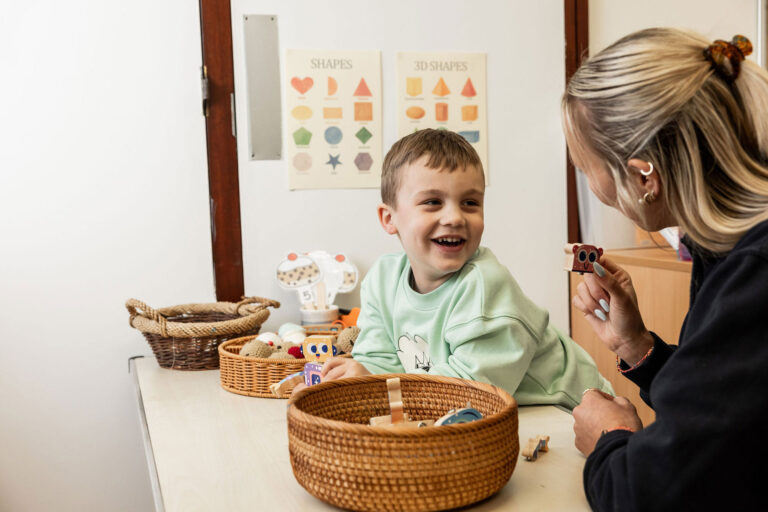
What happens when an experienced Change Professional teams up with a charity Operations Manager? If the chemistry is right, the results can be transformative.
We sat down with both sides of a mentoring partnership, set up through Lloyds Bank Foundation for the Channel Islands, to find out what it looks like in practice. We spoke with Mark Harris, Operations Manager for Jersey Heart Support Group, and Nick Halsall, Senior Product Owner, at Lloyds International.
How it started
The connection came through the Foundation. When the charity received a grant in 2025, it brought with it something just as valuable as funding: the offer of a mentor. For Mark, it was an opportunity too good to pass up.
“It’s been brilliant to have someone to bounce ideas off. Having that external point of view – on how the charity is organised, on the ideas we have – that perspective is something you just can’t get from inside.”
For Nick, coming from a background in strategy, marketing and planning, the initial concern was whether he’d have enough to offer. “I worried about whether I was going to add value, I don’t know much about the charity sector,” he admitted. But those commercial skills turned out to be exactly what was needed.
And then there was the chemistry. “We get on really well. Similar interests, similar enthusiasm. There’s a real openness, no defensiveness. We can challenge each other, listen to each other, take on each other’s perspectives.” That kind of relationship, both agreed, isn’t something you can manufacture.
What a mentoring session really looks like
Forget stiff, formal reviews. These sessions are relaxed, conversational and productive.
Nick comes with a loose plan: enough to give the session direction, but flexible enough to follow the conversation where it needs to go. Much of the focus has centred on branding, digital assets, social media, and the website, areas where commercial experience translates directly into charity value.
“What we’ve been able to do is bring a sense of professionalism to the charity’s work behind the scenes,” Mark explained.
One moment captures it perfectly. A connection Nick made that led to the charity being involved in a landmark Parkrun event – its 500th. “One small thing like that makes a huge difference,” Mark said. “That’s the kind of exposure that changes how people see you. We’ll be there on the day, not only cheering for the runners, but taking their blood pressure and taking their heart rate – putting our care, and reason for existing as a charity, into action.”
With heart disease touching so many lives, the charity knows the potential reach is enormous. The mentoring is helping them make sure they’re visible when people go looking.
The difference mentoring makes
The mentoring relationship began in September 2025, and the impact is already showing.
“We’re starting to see growth – getting better known out there,” Mark said. A new website is on the horizon, moving the charity from the outdated to the modern. The ambition is clear: to become one of the biggest charities in their field.
“We need to build like a business,” Mark said. “We need to take big steps forward, and Nick is helping us get there.”
Why mentoring matters
Both sides of this partnership offered a compelling case for why more people should get involved in mentoring.
For Nick, it was about doing something meaningful outside of the day job, something that fits around existing commitments but also gives back. “I wanted to do something that makes me feel good. It’s opened a whole new insight into the charity sector for me. I feel like I’ve genuinely been able to help, and that’s a really nice feeling personally.”
For the charity, it’s about access to thinking that would otherwise be out of reach. “We’re not always the smartest person in the room, and we don’t want to be. We want to consistently be learning and growing. We’re tapping into brains we could never have tapped into before.”
Mark’s advice to others considering working with a mentor? “You need to be open. Open to learning, open to listening. If you do that, the opportunity is endless. I walk away from our meetings with a buzz. I come away with so many things I would never have thought of. I’m genuinely excited about the future.”
That’s what good mentoring looks like.